
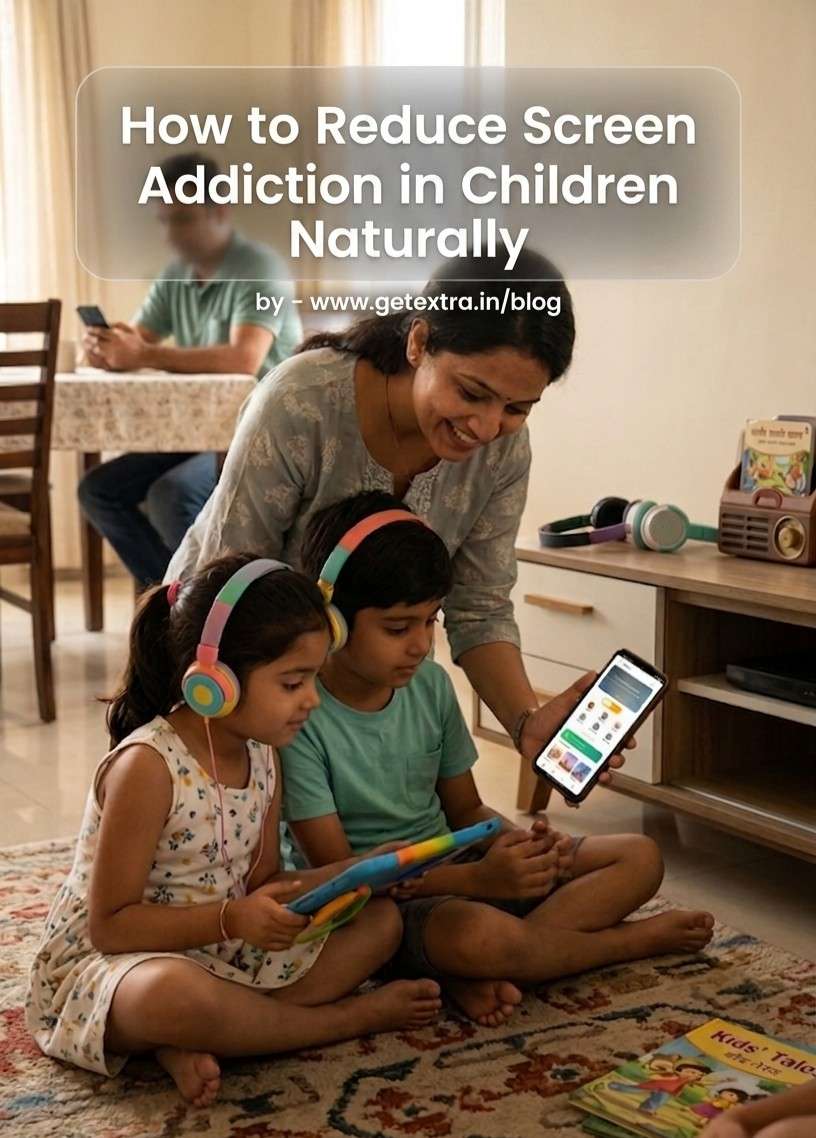
In today’s digital world, screens have quietly become part of childhood. Mobile phones, tablets, cartoons, gaming apps, YouTube videos, and short-form content now consume a large part of many children’s daily routines. While technology has many educational benefits, excessive screen usage is creating serious concerns for parents across the world.
Many children today become restless without mobile phones. Some lose interest in outdoor activities, struggle to focus on studies, or become emotionally irritated when screen time is reduced. Slowly, entertainment turns into dependency. This is why more parents are now searching for healthy ways to reduce screen addiction in children without creating constant conflict at home.
The first thing parents should understand is that screen addiction usually cannot be removed suddenly. If screens are taken away aggressively, children may react emotionally because the brain becomes used to continuous stimulation and instant dopamine from digital content. Instead of punishment, gradual habit replacement works more effectively.
One of the best ways to reduce screen addiction is to create alternative activities that are emotionally engaging. Children naturally move toward whatever feels exciting, fun, or emotionally rewarding. Outdoor games, creative hobbies, storytelling, drawing, music, sports, puzzles, and family activities can slowly reduce dependence on screens by giving children healthier forms of entertainment.
Storytelling is especially powerful for children. For generations, stories have helped improve imagination, concentration, emotional intelligence, and positive thinking. Unlike fast-paced video content, stories encourage children to think, imagine, and emotionally connect with characters and situations.
Audio stories can become an excellent modern alternative because they combine entertainment with learning while reducing continuous visual screen exposure. Children can listen to motivational stories, mythology, biographies, and inspirational content while resting, traveling, or before sleeping. This creates engagement without overstimulating the brain through endless visuals.
Another important step is creating screen-free routines at home. For example:
- Avoid phones during meals
- Reduce screen exposure before sleep
- Encourage family conversations
- Set fixed daily screen timings
- Keep children involved in household activities
Children learn habits mainly through observation. If parents continuously use mobile phones around children, reducing kids’ screen addiction becomes much more difficult. A healthy digital environment must begin with the entire family.
Sleep habits are also strongly connected with screen addiction. Many children use screens late at night, which affects sleep quality and emotional balance. Blue light exposure before sleep keeps the brain active and overstimulated. Replacing nighttime screen usage with calm storytelling or audio experiences can help children relax more naturally.
Positive reinforcement works better than fear or anger. Instead of constantly scolding children for using phones, parents should appreciate healthy habits whenever children spend time reading, playing outside, listening to stories, or engaging in creative activities. Encouragement creates long-term behavioral change more effectively than pressure.
Schools and social environments also influence children heavily. If children see every friend constantly using screens, they naturally feel drawn toward similar habits. This is why balanced exposure and meaningful engagement are more realistic solutions than completely banning technology.
The goal should not be to remove technology completely from children’s lives. Modern children will grow up in a digital world. The real challenge is teaching balanced and healthy digital habits while protecting imagination, concentration, emotional development, and real-world experiences.
Platforms like GetExtra are helping provide meaningful audio storytelling experiences for children through motivational, historical, and inspirational content that encourages imagination and positive thinking instead of endless passive scrolling.
Sometimes children do not need less entertainment. They simply need better entertainment.
FAQs
How can parents reduce screen addiction in children?
Parents can reduce screen addiction by encouraging outdoor activities, storytelling, hobbies, family interaction, and fixed screen routines.
Are audio stories good for children?
Yes. Audio stories improve imagination, concentration, creativity, and emotional development while reducing screen exposure.
Why are children becoming addicted to screens?
Fast-moving digital content provides continuous stimulation and dopamine, making screens highly engaging for young minds.
Should parents completely ban mobile phones?
Not necessarily. Balanced usage and healthy digital habits are usually more effective than complete restriction.

Was this article helpful?
Help us improve by rating this article.